Windows into Other Worlds

To give a book is to give a window into another world. Even if I like a particular author, I rarely give one of their books blindly, without first reading it.

Books are entirely subjective. You never know if a book will satisfy someone or, better yet, thrill them. Regardless, here are some titles I recommend (most are recent):

NON-FICTION

Figures In A Landscape by Paul Theroux, 2018. Essays for all seasons, from travel pieces to literary criticism to profiles of Elizabeth Taylor, Oliver Sacks, and Robin Williams. Full disclosure: One, I skimmed a few non-travel essays that didn’t grab me. Two, I’m not a fan of any of Theroux’s fiction.
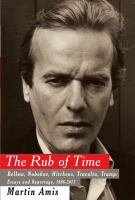
The Rub of Time by Martin Amis, 2018. Essays and Reportage, 1994-2017. A smorgasbord of Amis treats, mostly literary or political, with topics ranging from Saul Bellow to Donald Trump. Amis is regarded by some as the Bad Boy of Brit Lit. They say he’s crass. I say he’s entertaining. Full disclosure: One, I skimmed a few of the almost 50 essays; they weren’t in my wheelhouse. Two, I find Amis’s latest fiction unrewarding.

{As an aside, I feel no compunction to read everything that comes my way – even if it is supposed to be “good for me” or part of the canon.}

FICTION
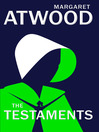
The Testaments by Margaret Atwood, 2019. 2019 Booker Prize Co-winner. Sequel to The Handmaid’s Tale. Clear-eyed, sardonic, accessible. Atwood doesn’t aestheticize The Testaments. The narrative is straightforward. As with all good novels, the prose is subservient to the plot.

Last but not least, my crime pick:
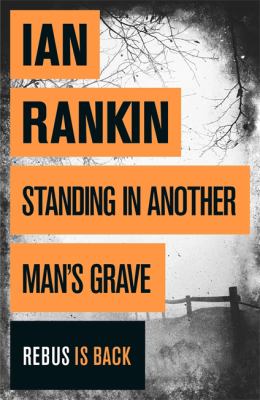
Standing In Another Man’s Grave by Ian Rankin, 2012. One of my favourites from the King of Scottish Noir. Rankin delivers brilliant banter and black humour wrapped in a cracking whodunit.

Crime Time: A Two-headed Compulsion

Why do writers write crime novels? Why do readers read them? We’d have to delve into the DSM (Diagnostic and Statistical Manual of Mental Disorders). 😉 We’d need a thousand hours – no, a million.

Let’s look at things from the reader’s side of the page. That’s what really matters: why readers read, not why writers write. It’s a large question. However, I’m going to take a succinct approach. Crime fiction suffuses the zeitgeist. Crime readers have favourite styles: cozy mystery, private investigator, police procedural, etc. Regardless, they’re all fascinated with one thing. Murder. Why?

I see it as a two-headed compulsion. One, readers want to experience the other side of life: death. Two, they want to experience fear. They crave it, but only fictionally: fear of the unknown, fear of the invader, fear of reprisal, fear of something that will disrupt their life – or end it. Fictionally, of course.

PS: Book sellers claim that everything hinges on sales, i.e., on book buyers. I beg to differ. Buyers are great, but everything hinges on readers. Period. That includes those who borrow from libraries or share a book a dozen times. The more shares (the more readers), the merrier.

A Siege of Bitterns – A Birder Murder mystery

A Siege of Bitterns by Steve Burrows. Dundurn Press. 2014.

Reviewed by A.M. Potter. ® 2019.

A Siege of Bitterns is the first novel in the “Birder Murder” series. The book won the 2015 Arthur Ellis Award for Best First Novel (for non-Canucks, the Arthur Ellis is the Canadian Nobel Prize of crime writing). A Siege of Bitterns is worthy of the prize.

The novel’s protagonist, DI Domenic Jejeune, is a Canadian transplanted to the UK. The mystery unfolds in the small Norfolk town of Saltmarsh, premier birding country. One might say Dejeune is a reluctant detective. He likes bird watching as much, if not more, than solving murders. To some of his fellow police officers, he’s a strange bird indeed. He occasionally comes across as a tortured eccentric. One wonders how he can solve crimes. But he does. His odd individualism is reminiscent of some of the most famous detectives in fiction. Shades of Sherlock Holmes, anyone? Or Hercule Poirot?

I won’t review the plot itself. I rarely do. I prefer to let the reader discover it. On the other hand, I will say that it’s clever, with a tangled bird’s nest of false starts and red herrings. You’ll exercise your grey cells on this one. Burrows delivers big personalities whose individuality springs from their dialog and thoughts, not from what they wear or drive. He also delivers enticing chapter endings, leaving the reader with a hook. What’s going to happen next? I want to know.

Burrows writes with flair. He deploys plenty of descriptive prose, yet he doesn’t lose momentum. I feel I’m in good hands. After a little flair, he returns to the core of crime writing: logistics. Clues and red herrings.

https://en.wikipedia.org/wiki/Steve_Burrows

The opening lines of A Siege of Bitterns:

“At its widest point, the marsh stretched almost a quarter of a mile across the north Norfolk coastline. Here, the river that had flowed like a silver ribbon through the rolling farmlands to the west finally came to rest, spilling its contents across the flat terrain, smoothing out the uneven contours, seeping silently into every corner ….”

The Best English-Canadian Novel of All Time

What’s the best English-Canadian novel of all time? Admittedly, when speaking of Canadian novels, all time isn’t a very long time, less than 250 years. {BTW, I’m not including French-Canadian novels. I don’t know them well enough.}

The History of Emily Montague (1769) is usually considered the first Canadian novel. Although there were dozens of novels published in the 19th century, CanLit didn’t really get off the ground until the 20th century. But I digress. This isn’t a history lesson.

The best English-Canadian novel is … drumroll please … The Englishman’s Boy, by Guy Vanderhaeghe, published in 1996.

I can hear dissent. I don’t mind. When it comes to books, I’m opinionated. As for the dissent, I’ll address some of it. “What about Nobel-prize winner Alice Munro?” Well, Munro wrote one book published as a novel, which is actually a collection of inter-linked short stories, albeit an excellent collection. “What about an Atwood or Lawrence novel?” Worthy of consideration, but I vote for The Englishman’s Boy. “What about novels by Hugh McClelland, Michael Ondaatje, Rudy Wiebe, Lisa Moore, or Miriam Toews?” Again, all worthy, but give me The Englishman’s Boy.

Here’s why. In a nutshell, The Englishman’s Boy delivers the best combination of prose and plot. A literary double play. The writing is masterful. Vanderhaeghe’s painterly descriptions are poetic yet direct. The storyline is just as masterful. You get a captivating page-turner that spans generations. I won’t elaborate on the plot. Suffice to say that it pulls you in and doesn’t let you go.

I’m not the only person who thinks Vanderhaeghe is a master. He’s won three Governor-General’s Awards for Fiction (one was for The Englishman’s Boy). His prose has been lauded by many. For example, Rick Salutin extolled its virtues in the ‘Globe and Mail,’ claiming that, to paraphrase Salutin, Vanderhaeghe’s sentences were “works of art.” The Englishman’s Boy was turned into a mini-series (which was almost as good as the novel). That is a tribute to the plot and a rare thing in itself – see: Movies vs. Books.

When I want to read a Canadian classic that delivers both excellent prose and plotting, I open the The Englishman’s Boy.

Author Talk & Signing, Wasaga Beach Library, Wasaga Beach, ON. Monday August 12, 6:00 PM

Author Talk & Signing at Wasaga Beach Public Library, WASAGA BEACH, ON. 120 Glenwood Drive. Directions | Website