Edgar Allan Poe (1809 – 1849) is best known for macabre stories such as “The Pit and the Pendulum” and “The Tell-tale Heart.” He is regarded by many as the inventor of the detective genre, which has expanded into multiple forms now considered to be sub-genres; for example, crime, mystery, detective, thriller, etc.
In the decades since Poe’s death, hundreds of authors have fleshed out his prototype: Homo detectus, a man or woman with a wide-ranging mind, ever seeking, ever suspicious.
A detective doesn’t believe everything people say. In fact, when on a case, he or she can’t afford to believe anything people say. Although humans like to believe each other — belief builds cooperation; it’s a societal glue — detectives default to the opposite: they distrust others. What a way to live. As a society, we’re indebted to them. While we enjoy each other’s company, detectives probe dark holes and darker hearts.
Elmore Leonard lived most of his life in Detroit, a working-class city, a ‘waste-not, want-not’ city. It’s no surprise he didn’t waste words in his fiction. Papa (Ernest) Hemingway is regarded by many as the ‘Father of Succinct Prose’: few adjectives, fewer adverbs. If Hemingway is the father, Leonard is the first son. In my view, he’s more Hemingway than Hemingway.
Leonard isn’t a traditional mystery writer. He doesn’t focus on sleuths trying to solve crimes. Instead, he delivers what I call Crime + Suspense. He keeps you guessing. You know the ‘hoods’ in his novels are going to pull a heist or execute a hit, but you don’t know how or when they’re going to do it.
Leonard generally writes from the point-of-view (POV) of criminals. In Get Shorty, for example, he creates an ambiance that sympathizes with – if not glamorizes – the criminal world.
As an aside, the majority of mystery novels feature detective leads, not criminal leads. When mystery authors use a murderer’s POV, to keep the whodunit in play they hide the murderer’s deepest thoughts – thoughts of murder. I’m not a big fan of using a murderer’s POV in a mystery novel. Not that it can’t work. An author can be inside a murderer’s mind, but not reveal everything that’s going on in there. Or, if the author reveals who the murderer is, they can keep the reader on the hook by slowly unveiling the how and why. In a sense, they deliver a howdunit.
Back to Elmore Leonard. He often presages what will happen near the start of a book, and then unravels how it happened. He knows how to tell a story: clean and fast, with lots of snappy dialog. That’s the signature of an Elmore Leonard novel. It’s noir, just not mystery noir.
“Tell me, what is it about a girl’s navel? It catches the eye and won’t let go.” “I suppose,” Dawn said, “because it’s right in the middle of the playground.”
Two “criminal” characters:
“I’m saying we’re all friends,” Frank said. “Kindred spirits. Birds of a feather.” “Man,” Sportree said, “you need some new words.”
The word novel is derived from the Latin novellus. As an adjective, novelmeans new, fresh, unique. Centuries after its birth, it also began to be used as a noun meaning story. ‘Hey, AMP,’ you say, ‘enough of the etymology.’ Right. Onward.
Novels are adept at delivering ideas andemotions, as well as action, setting, and mood. If an author concentrates on one thing – for example, what people say – a novel can fall flat. Talk by itself isn’t dramatic. Discussion devoid of action is a debate, not a story.
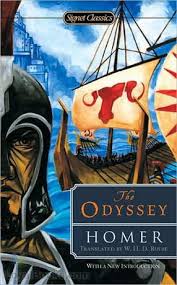
We all expect different things from novels. In my case, I want them to tell a complete story. Not just that some guy, let’s call him Odysseus, travelled for years, but how and where he travelled, and when and why, and who helped or hindered him – which are all included in Homer’s epic.
Beyond that, I want novels to tell a new story. ‘But, AMP,’ you say, ‘nothing is ever new under the sun.’ Fair enough. However, there will always be twists and shades: different settings, fresh perspectives, new odysseys.
Devoted book lovers always rank books above movies. But are movies ever better than the books they’re based on? Consider a case from Swedish noir: Stieg Larsson’s Millennium Trilogy (aka, the Dragon Tattoo Trilogy).
The books were a sensation. No debate there. However, the movies were far better (the three versions shot in Sweden). They have depth and complexity. As critics like to say, they live and breathe. You see the dark side of Swedish life. You feel Lizbeth Salander’s anger and disgust. And when you read the books? You don’t.
The English translations feel plodding and mundane. Relatively speaking, the books are dead wood. I’ll never read them again. However, I will watch the movies again. Movies: Three. Books: Zero. A lopsided win. And a shutout, as we Canucks say.
PS: IMHO, the Dragon Tattoo Trilogy is an exception. Books usually win. 😉
The first North Noir novel (Bay of Blood) is set in the summer; the second (The Color Red), in the spring; the next one, due out in 2024, in the fall. “Why no winter settings?” you ask. “No blizzards? No frozen bodies? It’s supposed to be NORTH noir.” Valid point. However, I have a reason – based on research. Well, on observation.
Not as many murders take place in the winter. “Why?” Because it’s winter. In the north, outside the cities, life slows down. Think human hibernation.
“Are you telling me that murderers are huddled next to their fireplaces? That it’s too cold to go out and kill someone?” Maybe. Hell, sometimes it’s too cold to go outside, period. Besides, murderers can’t risk harming their weapons. Take an axe. If you overuse it chopping wood, it’ll be too dull to whack someone. Consider a shovel. If you break the handle trying to clear ice, it won’t be available to crack someone on the head – a dozen times, of course (we’re talking noir, people). As for a shotgun, if you try to fire it at Minus-30, the barrel will explode or it’ll backfire. Forget about rendering it useless for murder. You’ll be dead yourself.