The Gift of the Gab: Tana French

During the course of 2021, I discovered a fine Irish-American novelist: Tana French, who writes literary detective novels set in or near Dublin (the Dublin Murder Squad series).

French’s dialog delivers the magic elixir of story-telling: presence. She can capture the essence of a character with a line or two of craic (conversation). She has the gift of the gab; like Elmore Leonard, her dialog will hook you.

French’s latest book, The Searcher (2020), is a stand-alone novel featuring retired cop Cal Hooper, a sympatico Yank who has washed up in the west of Ireland, looking to leave the mean streets of Chicago behind. Hooper worked Missing Persons in Chicago; as luck would have it, he becomes embroiled in a local misper case.

The story unfolds in rural Ireland, sans a slew of high-octane car chases or bloody gun battles. However, there’s no lack of drama. If you like stories told with a slow burn, yet plenty of flareups along the way, The Searcher is for you. If you want a policier with forensics and hardened criminals, look for French’s Dublin novels.

Tana French on Wikipedia: https://en.wikipedia.org/wiki/Tana_French
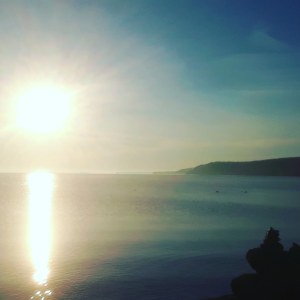
Naslund’s Swimming Hole, the Bruce Peninsula

Naslund’s Swimming Hole, the Bruce Peninsula, Ontario, Canada.

Autumnal Equinox, 2021. The water temperature is not bad, but it’s trending toward winter. Time to get the wetsuit out. 😉

Reading in the Time of Covid

Recent consumer studies show that book purchases increased during the pandemic and that the Crime/Mystery genre registered the most purchases, more even than Romance.

Now that Covid-19 is a small scourge — in my locale, that is — I’m reading more mystery/detective novels, more tales of death. Although whodunits revolve around murder, the plots explore everything under the sun. They portray all aspects of humanity, from the positive to the negative. They are good and evil incarnate.

So, I’m back at it, checking out the “deadly” genre. I wonder how it will reflect the new zeitgeist. What’s going on out there? Uncertainty and innovation, to name a few things. And murder, of course. It would take more than a pandemic to rid the planet of murder, not to mention murder mysteries and romances. Read on, dear reader, whatever your favourite genres.

Brief Answers from Detective Stephen Hawking

I’ve been reading a lot of Stephen Hawking recently – in some ways, the complete opposite of reading detective fiction. Then again, Hawking was a detective of sorts – searching for answers to elusive questions from physics and cosmology.

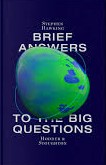
My favourite Hawking book is his last one, Brief Answers to the Big Questions (from 2018, the year he died). It’s a pocket-size compendium that summarizes his work by addressing ten big questions – e.g., “How did it all begin?” – mysteries beyond the purview of even Sherlock Holmes.

Hawking didn’t believe in creation myths; on the other hand, he admitted science doesn’t know exactly how the universe started. He writes clearly, which doesn’t mean reading him is always easy. When he gets deep into black holes or singularities, your brain can go into its own black hole. Fortunately, he soon brings you back to earth – to good-old 4-dimensional spacetime.

Hawking was one of the greatest scientific minds of the last 100 years. He stood on the shoulders of Einstein, Newton, Galileo, and Aristotle. Like Aristotle, he was also a philosopher. To me, that is Hawking’s true genius. Through science, he tried to understand humanity.

A Hawking quote:

“I have led an extraordinary life on this planet, while at the same time travelling across the universe by using my mind and the laws of physics …. On Earth, I have experienced highs and lows, turbulence and peace, success and suffering. I have been rich and poor. I have been able-bodied and disabled …. But it would be an empty universe indeed if it were not for the people I love, and who love me.”

John le Carré, King of the Spy Thriller

In memory of John le Carré (the penname of David Cornwell), who died in December 2020, I’ve been revisiting his novels. Many spy thriller heroes are almost superhuman. Le Carré’s heroes are flawed humans who rely on endurance and ingenuity.

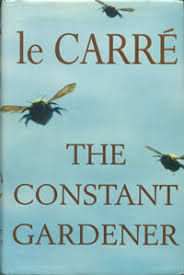
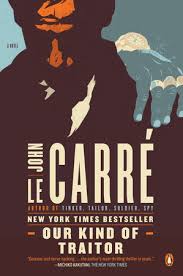
My favourite le Carré novels are The Tailor of Panama (1996), The Constant Gardener (2001), and Our Kind of Traitor (2010). PS: All three were made into movies.

The Tailor of Panama. The protagonist, Harry Pendel, a transplanted Londoner, is a wonderfully humane creation. Once a convict in England, he is now a tailor in Panama City – and bumbling spy. As Panama crumbles around him, he learns the values of family and integrity.

The Constant Gardener. The novel opens in Kenya: “The news hit the British High Commission in Nairobi at 9:30 on a Monday morning. Sandy Woodrow took it like a bullet, jaw rigid, chest out, smack through his divided English heart.” From there, the story spans the globe. Le Carré exposes not only the divided heart of England, but of the West as a whole.

Our Kind of Traitor. The plot turns on the open-heartedness of a young British academic, Perry Makepiece. However, the true star of the novel is Dima Krasnov, a Russian money launderer who wants to defect to England. Dima is brilliantly rendered. Part-bully, part-romantic, part-egalitarian, he drives the story to its inevitable end.