Ron Corbett: Maestro of Hinterland Noir

A century ago, in the time of Arthur Conan Doyle (of Sherlock Holmes fame), there were relatively few detective novelists. Not so today. There are hundreds of excellent (and prolific) detective/mystery novelists. Take Canadian Ron Corbett, an Ottawa-based author whose novels have been nominated for both the Edgar and Arthur Ellis awards.

Corbett is the epitome of prolific; he’s published four novels in the last five years. The first, Ragged Lake (2017), set in an abandoned village on the Northern Divide, is the opening salvo in the Detective Yakabuski series. The Divide, a fictionalized Canadian hinterland, is beautiful but unforgiving. Frank Yakabuski is as no-nonsense as Ian Rankin’s John Rebus. He’s also as well-drawn. Ragged Lake is a paragon of descriptive prose, as are the next two novels in the series, Cape Diamond (2018) and Mission Road (2020).

Continuing the Ian Rankin comparison, like the master of Scottish Noir, Corbett doesn’t dish out genteel whodunits. [Fans of cozy mysteries, be aware.] Corbett’s fictional violence isn’t gratuitous; it’s part of life on the Northern Divide. Yakabuski is the perfect cop for the region: hard-nosed yet imbued with a deep, one could say, mystical sense of the Divide.

After the Yakabuski trilogy, Corbett moved to the wild timberlands of Maine with The Sweet Goodbye (2022). The protagonist, Danny Barrett, is an undercover FBI agent. Like the Yakabuski novels, The Sweet Goodbye is a complex tale of deceit and retribution. Unlike them, the Maine novel has a major female character, which softens the plotline — in my view, to good effect.

At the risk of stepping into quicksand, let’s look at male vs female characters in the detective/mystery genre. {If you don’t want to step with me, please go to the last paragraph.} Consider Ian Rankin’s fictional world. He portrays women deftly, but the cops, murderers, and victims are mostly male. In my reading experience, the more hard-boiled a novel, the smaller the role women play in it. Of course, there are exceptions to the rule, such as the Dragon-Tattoo series with Lisbeth Salander.

I realize there’s an element of sexism in what I’m saying. ‘What, AMP, women can’t be tough or bad-ass?’ Sure they can. Take Salander again. I tend to look at the male-female continuum in terms of realism, not sexism. If females dominate an author’s fictional world, the reader shouldn’t expect males to play main roles. And vice versa. When males dominate a fictional world, you don’t often find numerous influential females. In my view, that’s fictional realism, not gender myopia. It’s up to the author to decide where they want to fall on the continuum. Readers will follow if they wish.

Bottom line: As a reader, when I’m not interested in a story, when the male-female continuum doesn’t ring true, I drop the book. Which I didn’t do with Corbett’s novels. I read all of them to their vivid ends.

For more information on Ron Corbett, see his website.
Shepherding a Flock of Words

A few weeks ago, Ben Fox of Shepherd.com asked for a curated list of books for his new site. The site was created to link readers to books, not just any books, but books recommended by authors as opposed to algorithms (which are used extensively by sites like Amazon).

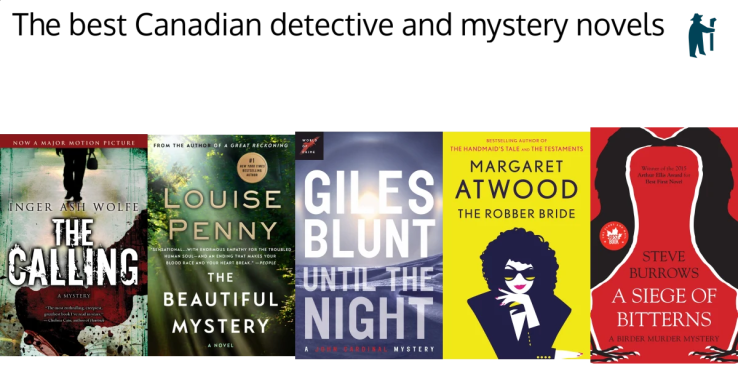
Ben asked for a focused theme. I chose “the best Canadian detective and mystery novels.” My top five 📚 recommendations are:

A Siege of Bitterns by Steve Burrows

The Robber Bride by Margaret Atwood

Until the Night by Giles Blunt

The Beautiful Mystery by Louise Penny

The Calling by Inger Ash Wolfe

Click the link below to see the full recommendations and a review of each title.

https://shepherd.com/best-books/canadian-detective-and-mysteries

Windows into Other Worlds: Gifts for the 2021 Holidays

To give a book is to give a window into another world. Here are a few gift ideas for the 2021 Holidays.

First, my crime fiction suggestion:

The Dark Remains by William McIlvanney and Ian Rankin, 2021. In The Dark Remains, Rankin completes an unfinished McIlvanney novel after his fellow Scotsman’s death. The story warms up slowly but is bubbling at the end. You can’t go wrong with Rankin, the King of Scottish Noir.

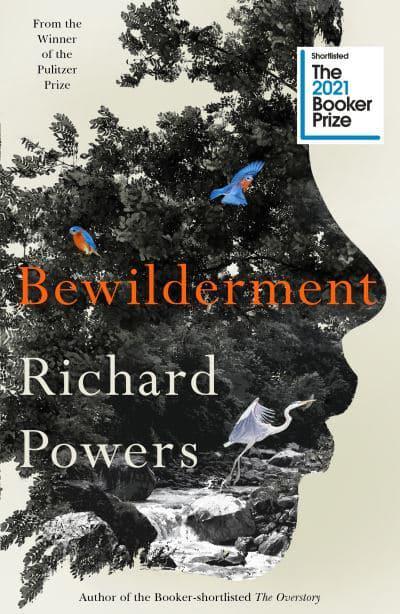
Bewilderment by Pulitzer-prize-winner Richard Powers, 2021. Bewilderment is set in the near-future, in a time of ecological collapse. Few adults are willing to confront the collapse. As with most dystopian fiction, there are didactic passages. However, the storyline eclipses them, as does Powers’ vision, which goes beyond the dystopic. A father and his son wrestle with the collapse, hoping that science will offer respite. It doesn’t. But the son’s love does.

Ring by André Alexis, 2021. Ring is a philosophical inquiry as much as a novel, which isn’t everyone’s cup of tea. If you have a literary fiction aficionado on your list, especially of 19th century fiction, Ring should please them. They’ll enter a contemplative world set in Toronto, a novel of manners à la Jane Austen or Leo Tolstoy.

No Reservations by Anthony Bourdain, 2007. In a previous post, I noted that Kitchen Confidential is my favourite Bourdain book. No Reservations runs a close second. No one would call Bourdain an earth-shattering writer yet he’s pensive as well as informative. This book delivers an entertaining combination of food and travel, two things many people miss these days.

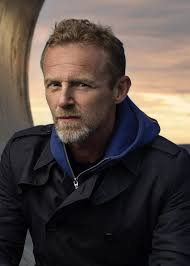
Norwegian Morality Tales: Jo Nesbo

I’m late to the game. I started reading Jo Nesbo in 2021. He’s been an international bestseller for years. Maybe that’s why I avoided him: I thought he could be a prolific writer who churned out serviceable but boring novels.

Although Nesbo is certainly prolific, he’s anything but boring. He writes consistently intriguing crime novels, not to mention work in other genres, such as children’s literature.

So, what is it about Jo? In short, the settings and the characters. Take the Detective Harry Hole novels, centered in Oslo. In that series, Nesbo switches effortlessly between description — of both people and places — and action, between local colour and the colour red, i.e., blood.

Some readers find that Nesbo overdoes the blood. Admittedly, there’s never a shortage of corpses in his crime novels but I accept his version of the Norwegian underworld, overblown though it may be. As for Nesbo’s characters, Harry Hole is a flagship protagonist: dark, at times unlikeable, yet uncompromising and driven, a man with raging booze and drug habits encased in a solid ethical core. In a sense, Nesbo’s Hole novels are morality tales; good struggles against evil, not only within Hole himself but also in the world at large.

If I have to pick a representative Harry Hole novel, it’s The Son (2014), which, on one level, is a retake of a central Christian myth — the Son trying to please the Father. To be expected with Nesbo, there’s a tsunami of blood. On the other hand, there’s a deep story here, a saga of good and evil full of pithy observations and a flood of emotional scenes.

Not a fan of blood and guts? Try a non-Harry-Hole novel like Midnight Sun (2015). Although certainly not a cozy mystery, to quote the LA Times, it’s a “softer, gentler Nesbo – as far as that goes.”

Jo Nesbo on Wikipedia: https://en.wikipedia.org/wiki/Jo_Nesb%C3%B8

The Gift of the Gab: Tana French

During the course of 2021, I discovered a fine Irish-American novelist: Tana French, who writes literary detective novels set in or near Dublin (the Dublin Murder Squad series).

French’s dialog delivers the magic elixir of story-telling: presence. She can capture the essence of a character with a line or two of craic (conversation). She has the gift of the gab; like Elmore Leonard, her dialog will hook you.

French’s latest book, The Searcher (2020), is a stand-alone novel featuring retired cop Cal Hooper, a sympatico Yank who has washed up in the west of Ireland, looking to leave the mean streets of Chicago behind. Hooper worked Missing Persons in Chicago; as luck would have it, he becomes embroiled in a local misper case.

The story unfolds in rural Ireland, sans a slew of high-octane car chases or bloody gun battles. However, there’s no lack of drama. If you like stories told with a slow burn, yet plenty of flareups along the way, The Searcher is for you. If you want a policier with forensics and hardened criminals, look for French’s Dublin novels.

Tana French on Wikipedia: https://en.wikipedia.org/wiki/Tana_French