PUBLISHING NEWS: The first novel in a DETECTIVE/MYSTERY series set in New England will be published by Stark House Press, California, USA. The novel turns on CAPE COD, BOSTON, and the BALKANS, and features Detective Lieutenant Ivy Bourque.
Book One RELEASE DATE: Spring 2023. Title and cover reveal in early 2023.
Stark House has also optioned the next book in the series.
A few weeks ago, Ben Fox of Shepherd.com asked for a curated list of books for his new site. The site was created to link readers to books, not just any books, but books recommended by authors as opposed to algorithms (which are used extensively by sites like Amazon).
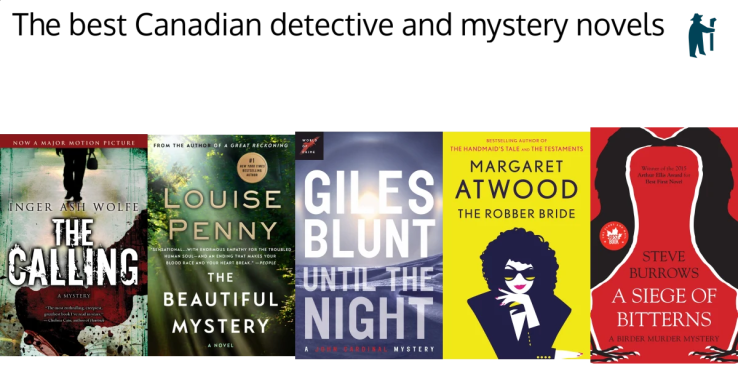
Ben asked for a focused theme. I chose “the best Canadian detective and mystery novels.” My top five 📚 recommendations are:
A Siege of Bitterns by Steve Burrows
The Robber Bride by Margaret Atwood
Until the Nightby Giles Blunt
The Beautiful Mystery by Louise Penny
The Calling by Inger Ash Wolfe
Click the link below to see the full recommendations and a review of each title.
To give a book is to give a window into another world. Here are a few gift ideas for the 2021 Holidays.
First, my crime fiction suggestion:
The Dark Remains by William McIlvanney and Ian Rankin, 2021. In The Dark Remains, Rankin completes an unfinished McIlvanney novel after his fellow Scotsman’s death. The story warms up slowly but is bubbling at the end. You can’t go wrong with Rankin, the King of Scottish Noir.
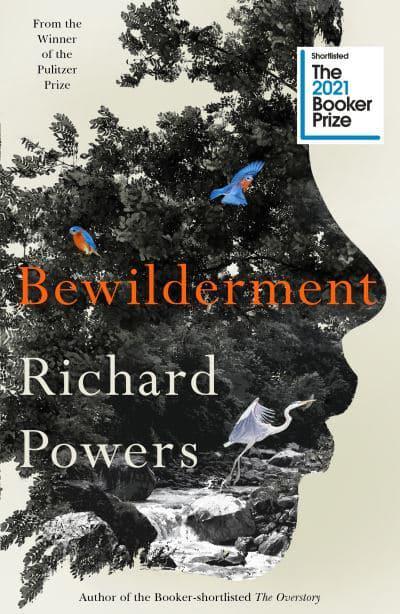
Bewilderment by Pulitzer-prize-winner Richard Powers, 2021. Bewilderment is set in the near-future, in a time of ecological collapse. Few adults are willing to confront the collapse. As with most dystopian fiction, there are didactic passages. However, the storyline eclipses them, as does Powers’ vision, which goes beyond the dystopic. A father and his son wrestle with the collapse, hoping that science will offer respite. It doesn’t. But the son’s love does.
Ring by André Alexis, 2021. Ring is a philosophical inquiry as much as a novel, which isn’t everyone’s cup of tea. If you have a literary fiction aficionado on your list, especially of 19th century fiction, Ring should please them. They’ll enter a contemplative world set in Toronto, a novel of manners à la Jane Austen or Leo Tolstoy.
No Reservations by Anthony Bourdain, 2007. In a previous post, I noted that Kitchen Confidential is my favourite Bourdain book. No Reservations runs a close second. No one would call Bourdain an earth-shattering writer yet he’s pensive as well as informative. This book delivers an entertaining combination of food and travel, two things many people miss these days.
I’m late to the game. I started reading Jo Nesbo in 2021. He’s been an international bestseller for years. Maybe that’s why I avoided him: I thought he could be a prolific writer who churned out serviceable but boring novels.
Although Nesbo is certainly prolific, he’s anything but boring. He writes consistently intriguing crime novels, not to mention work in other genres, such as children’s literature.
So, what is it about Jo? In short, the settings and the characters. Take the Detective Harry Hole novels, centered in Oslo. In that series, Nesbo switches effortlessly between description — of both people and places — and action, between local colour and the colour red, i.e., blood.
Some readers find that Nesbo overdoes the blood. Admittedly, there’s never a shortage of corpses in his crime novels but I accept his version of the Norwegian underworld, overblown though it may be. As for Nesbo’s characters, Harry Hole is a flagship protagonist: dark, at times unlikeable, yet uncompromising and driven, a man with raging booze and drug habits encased in a solid ethical core. In a sense, Nesbo’s Hole novels are morality tales; good struggles against evil, not only within Hole himself but also in the world at large.
If I have to pick a representative Harry Hole novel, it’s The Son (2014), which, on one level, is a retake of a central Christian myth — the Son trying to please the Father. To be expected with Nesbo, there’s a tsunami of blood. On the other hand, there’s a deep story here, a saga of good and evil full of pithy observations and a flood of emotional scenes.
Not a fan of blood and guts? Try a non-Harry-Hole novel like Midnight Sun (2015). Although certainly not a cozy mystery, to quote the LA Times, it’s a “softer, gentler Nesbo – as far as that goes.”
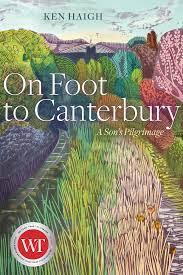
On Foot to Canterbury: A Son’s Pilgrimageby Ken Haigh, 2021. University of Alberta Press. Shortlisted for the 2021 Hilary Weston Writers’ Trust Prize for Nonfiction.
Near the beginning of On Foot to Canterbury, author Ken Haigh poses a timeless question: Why do humans travel? Haigh lets Robert Louis Stevenson answer: “I travel not to go anywhere, but to go. I travel for travel’s sake. The great affair is to move; to feel the needs and hitches of our life more clearly; to come down off this feather-bed of civilization, and find the globe.”
On Foot to Canterbury is Haigh’s second travel book (following Under the Holy Lake: A Memoir of Eastern Bhutan). His new book recounts a walk from Winchester to Canterbury, England, hiking the Pilgrims’ Way. The narrative is immediately engaging; it’s both entertaining and thought-provoking. In addition to being a personal journey and a tribute to his father, On Foot to Canterbury is a cultural journey. It delves deeply into England’s past. Haigh deftly weaves together three main threads — travel memoir, English literature, and English history — producing a vibrant tapestry.
With his journey coming to an end, Haigh asks himself why humans go on pilgrimages. In his words, “there is a wonderful simplicity about a pilgrimage. Each morning you rise and put on the same clothes …. You break your fast, hoist your pack onto your shoulders, and hit the road.” As you walk, you ponder and philosophize. Haigh’s journey took him beyond his physical destination, to a Pilgrims’ Way of the mind and soul. On Foot to Canterbury did the same thing for me.





 North Noir