Off-the-beaten Track

Under The Holy Lake by Ken Haigh, 2008. University of Alberta Press.

Reviewed by A.M. Potter. ® 2019.

Those who know me, know I’m a big fan of travelogues featuring distant lands. Few countries are as remote as Bhutan.

Under The Holy Lake presents a captivating memoir of two years in Bhutan. The prose is polished and whip-sharp. The author, Ken Haigh, is thoughtful and learned without being pedantic. The memoir is entertaining, at times light and effusive, yet also profound and intensely satisfying. What does it say?

Go to Bhutan. (Or, if not Bhutan, any place off-the-beaten track.) Live there, work there. If you can go when you’re young, all the better. It will stay with you for the rest of your life. Approach the new land slowly. Accept it warts et al; in the case of Bhutan, torrential rain, foot-long poisonous centipedes, and confusing social mores, to name a few.

Haigh certainly accepted it. His time as a teacher in Khaling, Eastern Bhutan, is a study in cultural adaptation, always a long and arduous road, and not always successfully traversed. He came to cherish Khaling – the valley under the holy lake – and the Bhutanese people. I won’t elaborate on the book’s narrative trajectory. I rarely do. Instead, I’ll say: “Read for yourself.” Experience the real Bhutan, from a to z: ara (corn-mash whisky) to zhugcho (please, sit).

PS: Haigh tells of two years in the late 1980s. Of course, places never stay the same. Bhutan is still 12,000 km from central Canada, but it is no longer distant in time. No place is.

Click to view Under The Holy Lake.

Windows into Other Worlds

To give a book is to give a window into another world. Even if I like a particular author, I rarely give one of their books blindly, without first reading it.

Books are entirely subjective. You never know if a book will satisfy someone or, better yet, thrill them. Regardless, here are some titles I recommend (most are recent):

NON-FICTION

Figures In A Landscape by Paul Theroux, 2018. Essays for all seasons, from travel pieces to literary criticism to profiles of Elizabeth Taylor, Oliver Sacks, and Robin Williams. Full disclosure: One, I skimmed a few non-travel essays that didn’t grab me. Two, I’m not a fan of any of Theroux’s fiction.

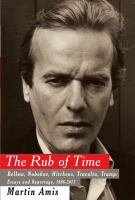
The Rub of Time by Martin Amis, 2018. Essays and Reportage, 1994-2017. A smorgasbord of Amis treats, mostly literary or political, with topics ranging from Saul Bellow to Donald Trump. Amis is regarded by some as the Bad Boy of Brit Lit. They say he’s crass. I say he’s entertaining. Full disclosure: One, I skimmed a few of the almost 50 essays; they weren’t in my wheelhouse. Two, I find Amis’s latest fiction unrewarding.

{As an aside, I feel no compunction to read everything that comes my way – even if it is supposed to be “good for me” or part of the canon.}

FICTION

The Testaments by Margaret Atwood, 2019. 2019 Booker Prize Co-winner. Sequel to The Handmaid’s Tale. Clear-eyed, sardonic, accessible. Atwood doesn’t aestheticize The Testaments. The narrative is straightforward. As with all good novels, the prose is subservient to the plot.

Last but not least, my crime pick:

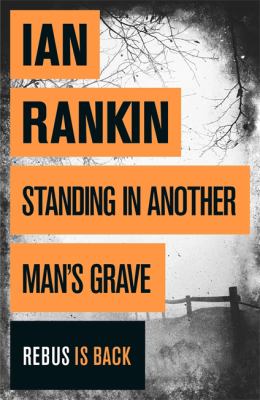
Standing In Another Man’s Grave by Ian Rankin, 2012. One of my favourites from the King of Scottish Noir. Rankin delivers brilliant banter and black humour wrapped in a cracking whodunit.

Crime Time: A Two-headed Compulsion

Why do writers write crime novels? Why do readers read them? We’d have to delve into the DSM (Diagnostic and Statistical Manual of Mental Disorders). 😉 We’d need a thousand hours – no, a million.

Let’s look at things from the reader’s side of the page. That’s what really matters: why readers read, not why writers write. It’s a large question. However, I’m going to take a succinct approach. Crime fiction suffuses the zeitgeist. Crime readers have favourite styles: cozy mystery, private investigator, police procedural, etc. Regardless, they’re all fascinated with one thing. Murder. Why?

I see it as a two-headed compulsion. One, readers want to experience the other side of life: death. Two, they want to experience fear. They crave it, but only fictionally: fear of the unknown, fear of the invader, fear of reprisal, fear of something that will disrupt their life – or end it. Fictionally, of course.

PS: Book sellers claim that everything hinges on sales, i.e., on book buyers. I beg to differ. Buyers are great, but everything hinges on readers. Period. That includes those who borrow from libraries or share a book a dozen times. The more shares (the more readers), the merrier.

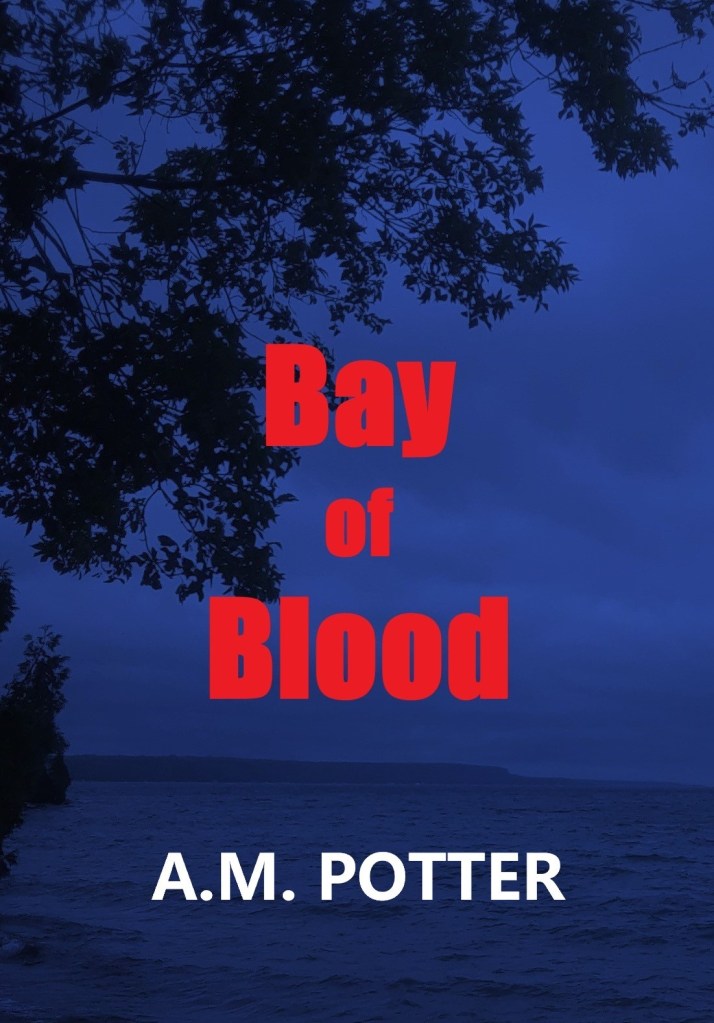
Bay of Blood: Tom Thomson Redux

Kudos for Bay of Blood: “A vivid page-turner” ~ Steven Heighton, Governor General’s Award Winner | “Quintessential Canadian mystery” ~ Lesley Choyce, Dartmouth Book Award Winner

Tom Thomson is a Canadian myth, a national icon. The famous painter died mysteriously in Canoe Lake, Algonquin Park, Ontario on July 8, 1917. The famous Canadian painter in Bay of Blood dies on July 8, 2017. Like Thomson, he often paints from out on the water, in his case from a sailboat, not a canoe. He’s part of an artist’s collective called the Gang of Eight, not the Group of Seven. His small skiff is named ‘West Wind,’ after Thomson’s most famous painting. So, there are references to Tom Thomson, but the famous painter in Bay of Blood is not Thomson.

Given Thomson’s iconic status, I didn’t want to meddle with his memory. Also, and this was very important to me, I didn’t want to offend his family in any way. I want him to rest in peace at Leith United Cemetery, or perhaps Canoe Lake. To this date, there’s no consensus as to where he’s buried.

Incidentally, when Thomson painted from his canoe, he used an easel-like device attached near the bow that held an 8×10-inch wood panel. He’d paint the panels very quickly, with minimal brushstrokes. It was his way of capturing scenes that would later be turned into full-size canvases in his winter studio. In essence, it was like today’s painter photographing a scene prior to painting it.

Leaving all that aside, I borrowed from the Tom Thomson myth. I didn’t fictionalize the man. I fictionalized the myth. I took elements from the myth and reshaped them. For example, Thomson is considered the Father of Canadian Painting. The famous painter in Bay of Blood leads a 21st century art movement that presents Canada to the world.

However, for the most part, I created new elements. I wrote a murder mystery about a painter called Thom Tyler, a TT Number 2, who, admittedly, is a Thomson Redux. But he’s soon dead.

Bay of Blood is narrated by an OPP (Ontario Provincial Police) detective based in the Bruce Peninsula. Detective Sergeant Eva Naslund is half Swedish and half Scottish-Canadian. Her father is from Sweden; her mother, from the Bruce.

Eva Naslund operates in a largely male domain, the jurisdiction of homicide. She goes to work with a homicide team who arrive in the Bruce from OPP Central in Orillia. They find no useful blood or DNA evidence, and no prints – no footprints, bootprints, or fingerprints. Nothing.

They turn to financial forensics. Tyler’s paintings are worth millions, yet he’s deeply in debt to banks and his art agent. As with many artists, he doesn’t get much when his work is sold. His agent gets the lion’s share.

Here’s a peep into the novel from Doctor Sherrill Grace, a UBC Professor and a Thomson scholar: “There are many clever details in Potter’s version of events with close parallels to Tom Thomson’s life and death. However, Potter takes his readers on a fascinating 21st-century chase, with bells and whistles never dreamt of one hundred years ago: cell phones, female detectives, Russian operatives, and shady Toronto art dealers. Whether or not you follow the Thomson saga, you’ll relish Bay of Blood’s new take on events.”

Thank you, Doctor Grace.

For Eva Naslund, working in the male homicide domain is tricky. The old-boy network throws a few spanners her way. But she rolls with the punches, giving back as good as she gets. She’s quick on her feet, she’s feisty. However, bottom line, she toes the line. For the good of the investigation and the good of her community – the Bruce Peninsula – she’s a team player. That’s not a spoiler alert. But this may be. Thom Tyler is not the only dead body in the novel.

Okay. No More. You know the saying. If I tell you any more, I’ll have to kill you. Well, in a book.

I’ve included a short excerpt from Bay of Blood, from an article about Tyler’s death:

Mr. Tyler, one of Canada’s most celebrated painters, was especially fond of nature. He traversed the Great Lakes for months at a time in a sailboat outfitted with an artist’s studio, in search of what he called the lost soul of Canada ….

Bay of Blood selected for submission to the ITW 2020 Thriller Award Contest

Bay of Blood was selected by Black Opal Books for submission to the 2020 ITW (International Thriller Writers) Thriller Award Contest [Best Paperback Original Novel Category]