2042 or Orwell, Didion, and The Writing Why

In Joan Didion’s last published work, Let Me Tell You What I Mean, she describes a talk she gave on writing, saying she stole the title of her talk from George Orwell’s essay Why I Write (1946). [Not into the writing game? You may want to skip ahead to the last paragraph.]

In Orwell’s essay, he argued that a writer writes from a desire to seem clever and be talked about. In addition to egoism, Orwell put pen to paper for political purposes. Hence we have, among other classics, Nineteen Eighty-Four.

Back to Didion. She relates that one reason she stole the title from Orwell was that she liked its cadence: “Three short unambiguous words that share a sound and the sound they share is this: I, I, I.”

“In many ways,” Didion claims, “writing is the act of saying I, of imposing oneself upon other people, of saying listen to me, see it my way, change your mind. It’s an aggressive, even a hostile act.”

Which brings me to today’s novelists. Why do they write? Orwell published his most famous novel (Nineteen Eighty-Four) in 1949; Didion, her final novel (The Last Thing He Wanted) in 1996. In 2024, few fiction authors write to impose anything on anybody, or admit to it. They don’t try to politicize readers. In my case, I aim to entertain them, which is not to say that I avoid topics like politics, ethics, or egoism.

Hmm, politics and egoism? Brings to mind a certain ex-president/wannabe dictator. ‘Hey, AMP,’ you say, ‘it could be fun to fictionalize him.’ True. How about an updated version of Orwell’s Big Brother, a double-speaking oaf with the attention span of a gnat? We’ll call it 2042.

Windows into Other Worlds: Book Gifts for the 2023 Holidays

To give a book is to give a window into another world. Here are five gift ideas for the 2023 Holidays.

First, two mystery/detective suggestions:

The Wolf and the Watchman by Niklas Natt och Dag, English translation from the Swedish, 2019. The Wolf and the Watchman should please any fan of historical crime/mystery fiction. The novel (set in Sweden in 1793) presents a captivating tale, beautifully told. The whodunit angle alternates between darkness and light, judiciously balancing good and evil. The Wolf and the Watchman is the first book in the Jean Mickel Cardell trilogy, which includes The City Between the Bridges and The Order of the Furies.
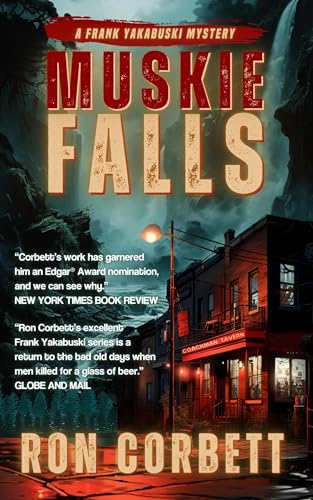
Muskie Falls by Ron Corbett, 2023. The first novel in Corbett’s Detective Yakabuski series, Ragged Lake, revealed that Corbett (from Ottawa, Canada) was a born storyteller. With Muskie Falls, the fourth novel in the series, his story-telling virtuosity becomes even clearer. Muskie Falls is equal parts riveting mystery and stylistic tour-de-force. The plot unfolds on the fictionalized Northern Divide, an unforgettable locale, perfectly rendered. The story is delivered with nuanced authenticity and the rip-roaring drive of a northern river.
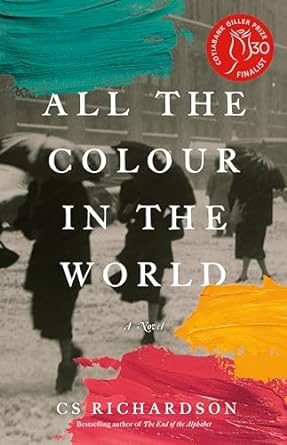
All The Colour In The World by C.S. Richardson, 2023. All The Colour In The World is lean, fast-paced, and atmospheric, more prose poem than traditional novel. If your giftee prefers expansive, detailed novels, this won’t likely be their cup of cheer. On the other hand, if they like reading outside the box, this could be their cuppa, a spare yet powerful story, anchored in Toronto but displaying all the colours of the world.
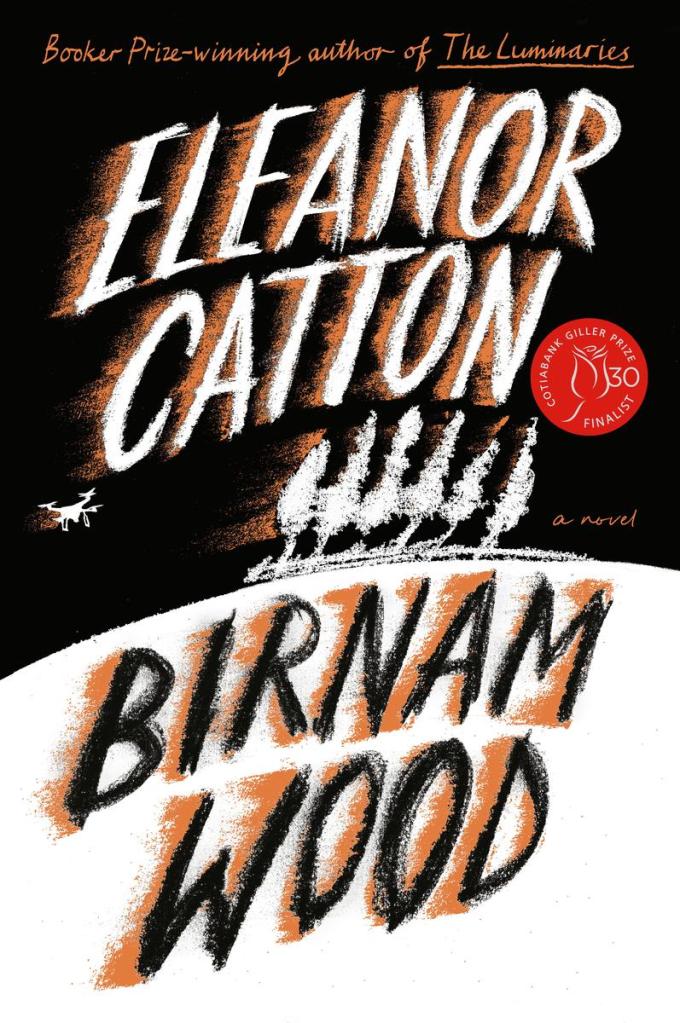
Birnam Wood by Eleanor Catton, 2023. Birnam Wood is both a beguiling story and a novel of ideas, a crucible of eco-idealism, survivalism, and human striving. The novel transports the reader to NZ’s South Island. Catton, a previous Booker Prize winner, knows how to hook an audience. The plot unfolds slowly (perhaps too slowly for some) but cleverly, reaching a thriller-type crescendo.

The Tao of Travel by Paul Theroux, 2011. Some travel books are timeless. Theroux’s The Tao of Travel is one of them. It contains a collection of evocative quotes whose origins span the globe. The reader can open it at any page. They’ll be instantly transported to the quote’s location. When they’re ready to venture off again, they can simply turn the page.
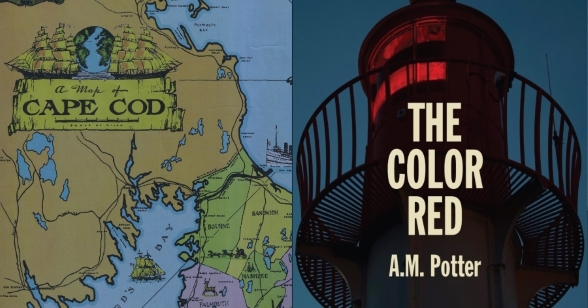
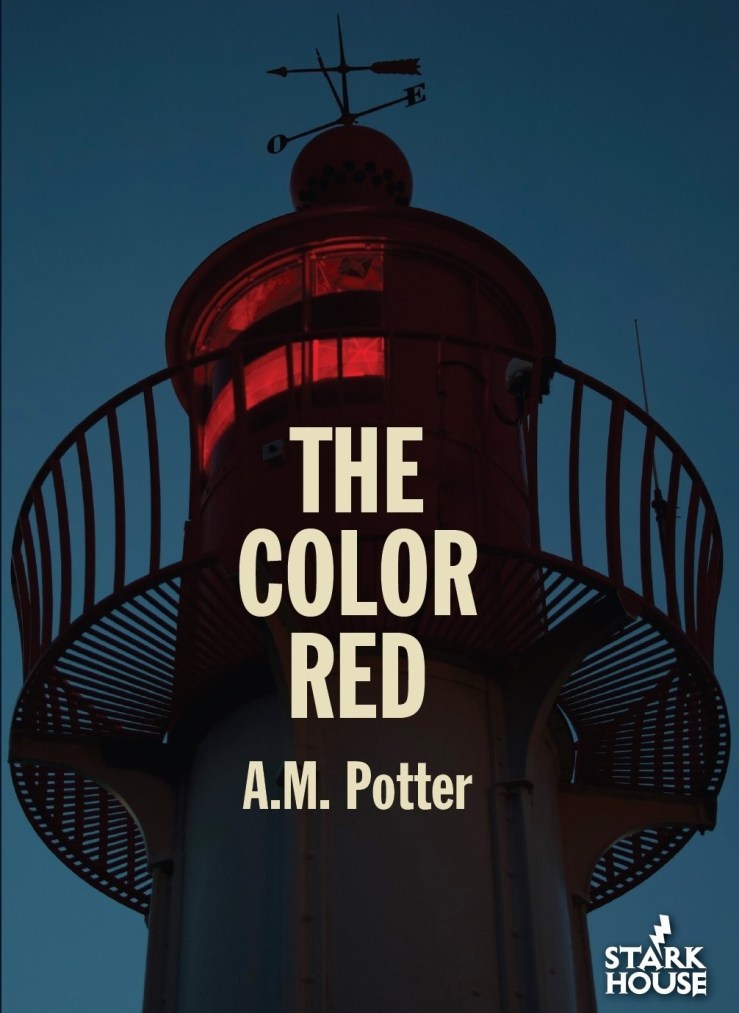
Ron Corbett’s Kudos for The Color Red

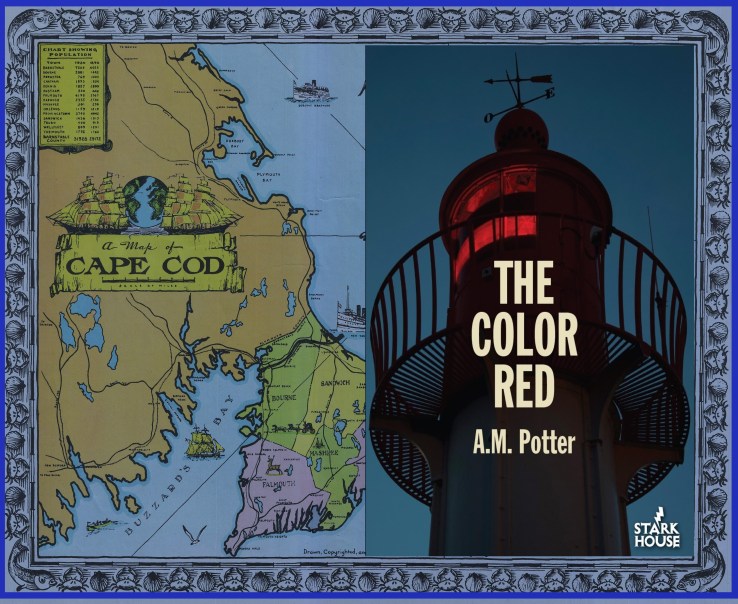
The Color Red is a first-class mystery that will keep you guessing until the final pages …. Potter’s vivid and memorable descriptions of Cape Cod will leave you smelling salt air and thinking of the Kennedys.”  

~ Ron Corbett, Author of the Frank Yakabuski and Danny Barrett Series (reviewed in the New York Times), Edgar Award and Arthur Ellis Award Nominee

Corbett’s site: https://www.roncorbettbooks.com/

A Little Entertainment (Just for the Heck of It)

A friend of mine used to call certain men “entertaining.” They might not be marriage material, but they could be fun for a dalliance. They were certainly a diversion; they made her laugh. As for serious objects of desire, they had to have at least some entertainment value. What good was a partner – be they rich, handsome, or blameless – without a sense of humour?

Okay, AMP,’ you say, ‘this isn’t a matching-making blog.’ Right. Onward, from amour to fiction, just for the heck of it. Critics and scholars often classify novels as being either commercial (i.e., entertaining) or literary. Nobel-prize nominee Graham Greene, widely-read and widely-respected, called some of his novels “entertainments.” Critics said it downgraded his oeuvre. I don’t see it that way. In my view, to be entertaining is a plus, not a liability. Books won’t save the world. However, they might take your mind off a few woes or tickle your brain – a little entertainment.

The Color Red: Bleeding Facts into Fiction

The history of the novel has been characterized by unending experimentation. However, one thing has remained constant. Novels are based on facts, real-world details that are twisted and turned to spin a story.

Every work of fiction sits on a fact-fiction continuum. On one end of the continuum there is pure fact; on the other, pure invention. Much of any novel sits somewhere in between.

What about The Color Red? What facts bleed into its fiction? The novel’s main murderee, Rollo Novak, loosely resembles Robert Herjavec; Novak’s business associate, Karlos Vega, loosely resembles Kevin O’Leary. Readers might recognize the names: Herjavec and O’Leary appeared on Dragon’s Den in Canada and now appear on Shark Tank in the US. However, the resemblance isn’t crucial to the story. Novak’s first wife, Melanya, was born in Slovenia. She might remind readers of a First Lady named Melania, who was also born in Slovenia. Of course, while Melanya Novak may mirror someone – anyone – she’s just a character in a novel. As copyright disclaimers say, “Any resemblance to actual persons is entirely coincidental.”

Then there’s Detective Lt. Ivy Bourque, the main character in the novel as well as the series. She’s not based on anyone “factual”; however, she is a prototypical New Englander: amiable, capable, and perceptive. On her father’s side, her French-Canadian heritage pays homage to Jack Kerouac, whose parents migrated from Quebec to Massachusetts in the early 1900s.

One final note for aficionados of fact-in-fiction and true crime stories. The main crime scene in The Color Red, an indoor pool, echoes the crime scene of a recent double murder in Toronto, Canada: the Barry and Honey Sherman murders. Echoes, I say. Okay, I’ve said enough. 😉 If I keep going, I’ll leak some spoilers.

Click here for sales information on THE COLOR RED.

To preview THE COLOR RED, download the free teaser below.