The Queen of Canadian Mystery

Which female Canadian author has written the best mystery novel? Who’s the Queen of Canadian Mystery? Many will say Maureen Jennings, author of the Detective Murdoch series. Others will say Louise Penny, author of the Inspector Gamache series. I say Margaret Atwood. “What the &^$#!” you say. You’re an idiot.” I know. An opinionated idiot. Let the mud fly. 😉

Before I reveal the mystery novel, I’ll relate a few arguments I’ve heard from friends. “Atwood isn’t a mystery writer.” Correct, in as much as she’s not labeled a mystery writer. “Atwood doesn’t need kudos from anyone. She’s already famous.” Also correct. “Pick someone more current.” I will, when the new Queen comes along.

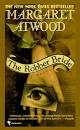
Now, to the question at hand. The best mystery novel written by a female Canadian author is …. The Robber Bride.

Get &^$%,” you say, “The Robber Bride isn’t a genre novel. It’s literary fiction.” Yep. But that doesn’t mean it’s not a mystery, and a damn fine one. I admit, it’s not noir. I’m also stretching the definition of “mystery novel.” The Robber Bride doesn’t feature a detective or a parade of murderees. The reader knows the villain (Zenia) from the start. But you don’t know what she did, or how she did it. That’s the mystery – the howdunit, you might say.

Atwood delivers enough plot twists and obfuscation to please the most demanding of mystery fans. She deploys wry humour and strong prose. She makes you think. However, The Robber Bride has its limitations. It isn’t for the hard-boiled. Too much literary description, too much talk of “feelings.” Oh, those dreaded feelings. Me, I like a good dose of feelings now and then. I don’t want noir all the time.

The Robber Bride by Margaret Atwood. McClelland and Stewart. 1993.

https://en.wikipedia.org/wiki/The_Robber_Bride

CBC Radio One ‘Ontario Morning’ Interview

Ontario Morning‘ host Wei Chen (CBC Radio) invited me to talk about North Noir and Bay of Blood on Tuesday, April 30, 2019.

Interview Introduction: Author Andy Potter’s new book Bay of Blood recently hit shelves across the province and is the first in a series that follows fictional OPP Detective Eva Naslund.

June 2020 UPDATE: Apologies. The audio clip of the interview is no longer available from the CBC.

Bay of Blood Press Release

‘OrilliaMatters’ Press Release: Novel based on bizarre death of Canadian icon set in Georgian Bay.

Bay of Blood, a new novel set in Georgian Bay, is based on the mysterious death of renowned Canadian painter Tom Thomson.

The book’s idea came to author Andy Potter when he was watching a documentary about Thomson’s life and mysterious death called West Wind: The Vision of Tom Thomson. This would make a great novel, Potter thought. Then he thought, No, it wouldn’t. You can’t fly too close to the Tom Thomson myth. It’s sacred. He’s a Canadian icon.

So, Potter wrote a mystery novel based on Thomson’s death. Thomson died on July 8, 1917. The famous painter murdered in Bay of Blood died on July 8, 2017. There are other similarities, but the painter in the novel is not Thomson, and he’s not the main character. The novel’s main character is OPP Detective Sergeant Eva Naslund.

Click here to see the full story.

Lexicography: What Can You Write with 50 Words? … Web 3.0

For many years, I worked in IT and wrote web-based software – mostly middleware – using various programming languages, among them Java and .NET. “OK, AMP, but what’s that got to do with writing fiction?” Patience, Grasshopper.

Most computer languages have no more than 100 keywords or ‘reserved’ words, and fifty or so main ones, such as if, then, for, etc. I used those fifty words over and over again. In essence, the world was reduced to fifty words.

How would that work with human language? Fifty words in English? Not a good thing. Are fifty computer keywords really enough? You’d think the paucity of computer lexicons would render the IT world flat and colourless. It could, and it did – from the 1950s to the 1980s. Think mainframes and keypunch cards.

Then came the UX (User eXperience) Revolution: user-friendly interfaces and web browsers. Next came smartphones and apps. Consider what’s been created with a fifty-word base: Web 1.0 and Web 2.0. Of course, you could say that IT has pauperized the world, reduced it to two-dimensional screens, to a virtual realm, to a hell of trolls. Yep, there IS all that. But there is more. For instance, there’s blog space. You and I are ‘talking’ now. Well, I imagine you talking with me. That’s how I think of it.

Let’s do a very cursory comparison of a human language and a computer language. When learning a new human language, say English, if you master 1000 words you’re well on your way – not to being a poet, but to being functionally literate. Conversely, Shakespeare used over 21,000 words (and is credited with coining 1,800 of them). The Oxford English Dictionary contains about 200,000 entries. When learning to program in C++, you learn fifty or so keywords. Only fifty! It’s amazing what a CPU can do with fifty keywords.

Think of human culture as a whole. Human languages have spawned millions of books. Computer languages have spawned millions of URLs. I’m not suggesting we can compare human lexicons to computer lexicons. It’d be like comparing a book to a byte. So, let’s move on. At the moment, Web 3.0 is in its infancy. It will use the same fifty keywords. Can you expect them to accurately mirror the real world? No. But coders will keep trying.

PS: To all the code warriors and IT professionals out there: You’re right, you use thousands of variables and elements, not fifty. But I’m referring to reserved words. Look what you’ve done with them. Billions of humans are glued to their phones. Which brings new meaning to the old maxim: “Words are powerful.”

Playing the E-Promotion Game

There’s a fine line between promotion and flaming, between enticing people to look at something and harassing them. The e-promotion world is huge. Here’s a look at one small country: the author/publishing nation. Caveat: This post may only appeal to authors. However, if you’re interested in e-promotion – be it for books, services, or anything else – read on.

The Game. “You’re an author now,” my publisher said. “Enlarge your social media footprint.”

Size twelve wasn’t good enough. Size twenty-four was the ticket. So, I wrote blog posts. I sent broadcast emails. I facebooked, linkedin, tweeted, and instagrammed. I was a hamster on the promo wheel. But who was caught on a bigger wheel? The people who knew me. For example, those who’d been online friends for years, back when I barely posted anything. Suddenly I was posting a river. “What the #*&?! This guy is foaming at the pen.” Sorry about that. And thank you for navigating the river.

Let’s leave aside tweets and I-grams and focus on blogging. When you publish blog posts, you are given the option of connecting to readers via the main social media dragons of the day (such as fb and LinkedIn). The dragons ask to use your email contacts to generate more traffic.

Sounds good, so you let them. They then ingest all the email addresses you’ve ever sent email to or received email from. The dragons blast every contact, even people who don’t remember you or emailed you ten years ago. Your contacts get burned. But your publisher gets happy. So somebody wins. Hey, maybe some of your contacts win too. They like what your site delivers. Good news. If enough of them are happy, there’s a win-win.

I’m no social media guru. However, I have a few simple tips about blogging. ONE: When the dragons ask to use your email contacts, uncheck ‘All’ and manually select the contacts you want. TWO: Pick the right time to publish your posts. I chose the weekend (I don’t want to blast people during the work week). THREE: Keep your posts short; most of mine are under 300 words (be good to your readers – they’re time-pressed).