The Night Fire – California Noir

The Night Fire by Michael Connelly. Little, Brown and Company. 2019.

In his lengthy oeuvre, Michael Connelly has created a contemporary version of California Noir: murder turns on money and fame – not just money, not just fame. In the case of victims, wealth and fame put targets on their backs. As for murderers, they kill for money and notoriety.

The Night Fire opens with detectives Hieronymus (Harry) Bosch and Renée Ballard joining forces. Although two detectives aren’t always better than one, in this novel they are. Bosch, recently retired from the LAPD, and Ballard, a LAPD graveyard-shifter – an outsider and an insider – team up to solve a recent murder. Being L.A., one murder case leads to another. And another. The novel won’t win awards for inventive prose. {If that’s what you’re looking for, take a pass.} However, The Night Fire has garnered numerous kudos. To wit: “Connelly is without peer when it comes to police procedurals …. He’s the modern master of the form.” ~ Publishers Weekly.

Connelly shines a light on the personal side of police work. Unlike many current crime authors, he focuses more on life as a detective than CSI magic. You experience the day-to-day existence of Bosch and Ballard as they pursue perps, sifting through an avalanche of evidence.

The novel delivers a boatload of police procedural details, but they don’t sink the storyline. The Night Fire is sharply plotted. The protagonists are tough yet sympatico. Connelly fans won’t be disappointed.

Barbecuing in the Anthropocene

Normally, I write about fiction, but when reality is as strange as fiction, the two coalesce. Caveat: If you’re here for books, give this blog a miss.

On every continent, we’re battling COVID-19. We’re certainly resilient. However, we’re not immune to future viruses.

We’re not top dogs in the universe. We’re not even top cockroaches, which, apparently, are more resilient than us. They say this is the Anthropocene, the Epoch of the Human. GDP and ingenuity may be on the rise, but I don’t see our humanity evolving.

Enough, AMP. We’ve had enough gloom and doom. Got any good news?’ Always. Grilled roaches are delicious.

Turning to the Light – Round II

As noted in ‘Turning to the Light,’ in dark times I turn away from crime/mystery fiction. I read “brighter” fiction. Here are a few more suggestions. Caveat: Although the two titles below aren’t murder stories, as with most fiction, there is death.

Gould’s Book of Fish: A Novel in Twelve Fish by Richard Flanagan, 2001. A sweeping fictionalized account of the convict William Gould’s life in 1820s Tasmania. The central theme is man’s inhumanity to man. One of the finest Australian novels.

Dirt Music by Tim Winton, 2002. To continue the Down Under theme, Dirt Music is another modern Australian classic. It sings the raw underbelly of Western Australia in the late 20th century: the money, the greed, and, above all, the power of the land.

Turning to the Light

I don’t know about you, but in dark times I turn away from crime/mystery fiction. I want brighter stories. ‘Bright, AMP? Aren’t you supposed to be a noir guy?’ Hey, bright doesn’t mean soppy. 😉 Here are a few novels that fit the bill for me, and maybe you.

The Inheritance of Loss by Kiran Desai, 2006. At first glance, a simple story. However, it radiates deep emotion. One of my favourite works of literary fiction from the last 15 years.

The Old Man and The Sea by Ernest Hemingway, 1952. A timeless tale, told with the direct prose of a fable. The story is mythic, yet it feels absolutely real.

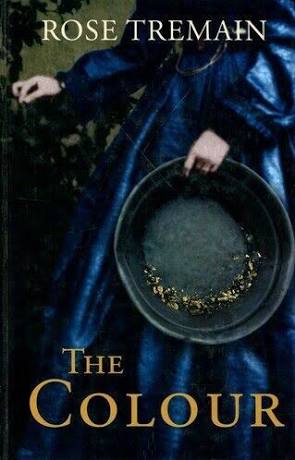
The Colour by Rose Tremain, 2003. A British couple migrate to New Zealand (South Island) during an 1860s gold rush. As with many tales of migration/colonization, the migrants and natives clash (in this case, the British and the Maoris). There is pain and conflict, yet the tone is uplifting.

For more suggestions, check out Turning to the Light – Round II.

Dark Angels

To some, crime noir is a subgenre set in grim urban environments, featuring petty criminals and desperate characters, permeated by a sense of disillusionment. I favour a wider lens. In the two North Noir series, crime noir is less bleak. It is more like life itself: not always dark, not always light.

Crime noir is linked to film noir, to movies such as The Maltese Falcon, which was first a novel. In a noir detective novel, the main character is sharp-witted and/or sharp-tongued. No quarter is given. Criminals try to rig the system, but fail.

Of course, noir detectives aren’t lily white. They cross lines, some more egregious than others, which they breach for the sake of efficiency or to apprehend criminals. Noir detectives are crime fiction’s dark angels. They know darkness, but follow the light.