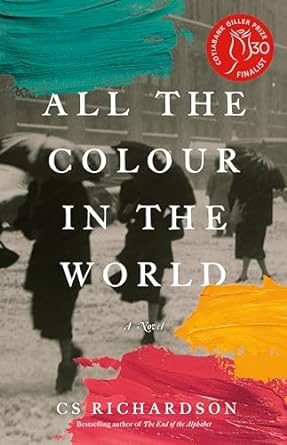
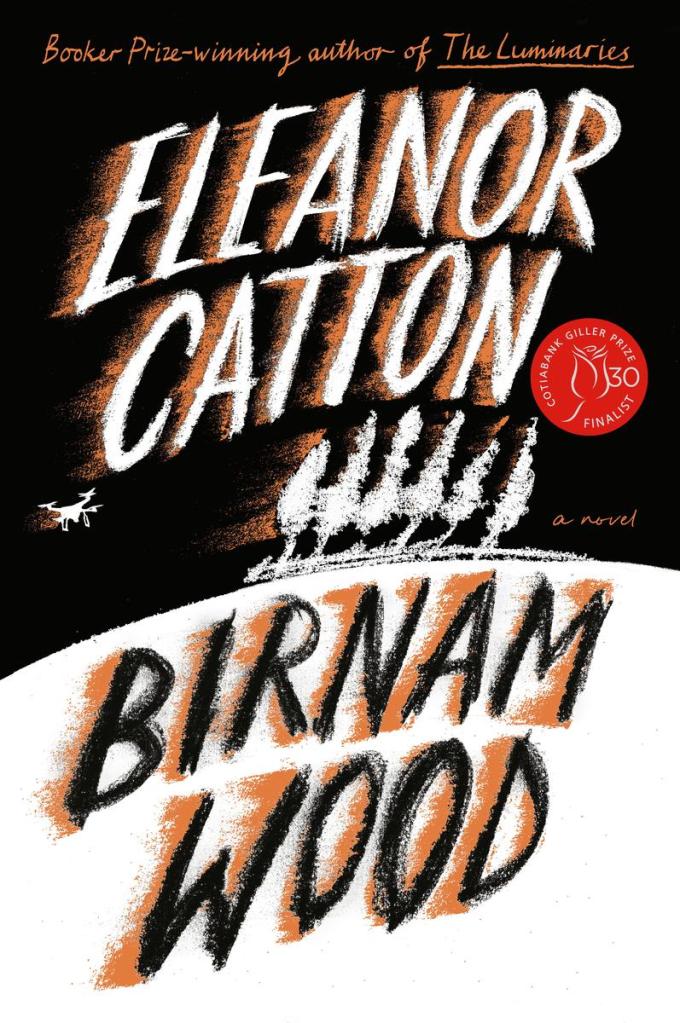
This year, I fell for two of the five books on Canada’s Giller Prize shortlist: All The Colour In The World by C.S. Richardson and Birnam Wood by Eleanor Catton. “Only two?” you say. True. However, for me, two out of five is a windfall. Some years I don’t fall for any.
All The Colour In The World is fast-paced and atmospheric, more prose poem than traditional novel. Birnam Woodunfolds slowly (perhaps too slowly for some), delving deeply into its characters’ motivations. Set largely in Toronto, Richardson’s story deploys short evocative anecdotes; Catton’s relies on lengthy episodic portraits to spin a tale set in New Zealand’s South Island. While All The Colour In The World is a paean to memory and the power of art, Birnam Woodis primarily a novel of ideas, a crucible of eco-idealism, survivalism, and human striving.
The Untimely Resurrection of John Alexander MacNeil (sequel to The Unlikely Redemption of John Alexander MacNeil) by Lesley Choyce, 2023.
Reviewed by A.M. Potter. ® 2023
John Alexander MacNeil, aka John Alex, lives in a remote, rundown farmhouse in Nowhere, Cape Breton, an arduous yet idyllic setting. Add a cast of quirky Cape Bretoners and a dance with Death, and you have the makings of a potent Down-East tale with a Faustian bent.
The novel opens with John Alex dying and coming back to life, whereupon he meets Death, whose form resembles that of a local doctor. Being a feisty ninety-year-old, John Alex tells Death to take a hike. He goes on to spurn Death a few times. The man may need to pee constantly, but his blood doesn’t carry a dram of fear. His ancestors were Scottish Highlanders who had nothing to lose.
When Death tries to make a deal with John Alex, saying he’ll spare the old man and instead take someone from his circle, John Alex gives Death the metaphorical finger. JA is not a man for Faustian bargains. But neither is he a typical hero. His knees creak, he loves to nap. As he says, “Anyone would think that by the time you hit ninety, you would have some things figured out. That you might look back on your life and see the sense to it. That you might have a kind of wisdom garnered by years of experience …. But that was certainly not my case.” Regardless, JA is utterly determined. He’s not ready to die. He has people to help.
To give a book is to give a window into another world. Here are five gift ideas for the 2022 Holidays. Today, North American authors. See last week for British authors.
First, a mystery/detective suggestion:
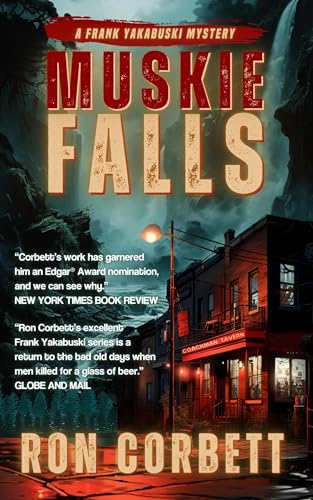
The Sweet Goodbye by Ron Corbett, 2022. Corbett has been nominated for both the Edgar and Arthur Ellis awards. The Sweet Goodbye is a complex tale of deceit and retribution set in the wild timberlands of Maine. Like Ian Rankin, Corbett doesn’t dish out genteel whodunits. However, Corbett’s fictional violence isn’t gratuitous; it’s part of life in the hinterland. [NB: The Sweet Goodbye may not suit fans of cozy mysteries.]
On Foot to Canterbury: A Son’s Pilgrimageby Ken Haigh, 2021. Shortlisted for the 2021 Hilary Weston Prize (Nonfiction). Do you have a traveler, hiker, or lover of English history and literature on your gift list? On Foot to Canterbury recounts a walk from Winchester to Canterbury, England, hiking the Pilgrims’ Way. The book delves deeply into England’s past. Haigh weaves together three main threads — travel memoir, English literature, and English history — producing a vibrant tapestry.
Stray Dogs by Rawi Hage, 2022. Shortlisted for the Giller Prize. Stray Dogs is a collection of sharply-etched stories ranging from Beirut to Montreal to Baghdad. All are sparsely told; all unfold with a quick, addictive pace. Full disclosure: A few of the stories didn’t grab me, but I’m hard to please. 😉 Regardless, Stray Dogs delivers far more delights than disappointments.
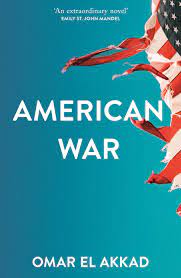
American War by Omar El Akkad, 2017. El Akkad won the 2021 Giller Prize for What Strange Paradise. American War is told with taut, clean prose. The novel’s apocalyptic post-oil storyline brings to mind Atwood’s The Handmaid’s Tale. The plot is inventive and disquieting. The post-oil world is artfully rendered. NB: The first 100 pages get mired in a few ruts. After that, the novel takes off.
A Season on Vancouver Island by Bill Arnott, 2022. Arnott is the award-winning author of numerous travel books and novellas. If your prospective giftee has visited Vancouver Island or plans to, present them with A Season on Vancouver Island, a travel memoir for all seasons. Arnott’s writing is humorous, poetical, and illuminating. For those yet to visit one of the world’s most majestic islands (and its surrounding archipelago), the book will whet their appetite and inform their journey. For those who’ve been there, the book will bring them back – to, as Arnott describes it, the language of ravens and the sound of sea-wash.
To give a book is to give a window into another world. Here are four gift ideas for the 2022 Holidays. Today, British authors; next week, North American authors.
First, a mystery/detective suggestion:
Arthur & George by Julian Barnes, 2005. Shortlisted for the Booker Prize (Barnes won it for The Sense of an Ending, 2011). Arthur & George should appeal to aficionados of detective fiction as well as literary fiction. The novel retells the story of Sir Arthur Conan Doyle (Sherlock Holmes’ creator) championing a lowly solicitor named George Edalji. Arthur & George aired as a TV mini-series in 2015.
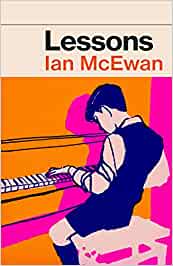
Lessons by Ian McEwan, 2022. If you know someone who likes long, contemplative novels, Lessons could fit the bill. {NB: It weighs in at 448 pages, which could be too long for some.} Like Julian Barnes, Booker-prize winner McEwan is an elegant stylist. Lessons features a worldly plot and vivid detail, such that a social anthropologist could read it hundreds of years from now and form a solid picture of the novel’s era: post-WW II.
Elizabeth Finch by Julian Barnes, 2022. In Elizabeth Finch, Barnes has created a memorable character, a stoic, erudite Londoner. Finch is a beacon of light to the novel’s protagonist. She propels him to write a study of Roman Emperor Julian the Apostate. NB: The novel is a philosophical exploration as much as a contemporary narrative. If your prospective giftee favours novels salted with metaphysics or antiquity, Elizabeth Finch is sure to please them.
Inside Story by Martin Amis, 2020. McEwan, Barnes, and Amis are considered three of the best British authors of the post-war period. Although subtitled A Novel, Inside Story is largely biographical. Amis regales readers with unique insights, both frivolous and cerebral. He grew up in a time and place of, let’s say, amorous exuberance (Swinging London, 1960s-70s). The novel uncorks womanizing and braggadocio, but also poignancy, self-doubt, and generosity of spirit. If your giftee admires inventive prose and unabashed characters, this is a book for them.
A century ago, in the time of Arthur Conan Doyle (of Sherlock Holmes fame), there were relatively few detective novelists. Not so today. There are hundreds of excellent (and prolific) detective/mystery novelists. Take Canadian Ron Corbett, an Ottawa-based author whose novels have been nominated for both the Edgar and Arthur Ellis awards.
Corbett is the epitome of prolific; he’s published four novels in the last five years. The first, Ragged Lake (2017), set in an abandoned village on the Northern Divide, is the opening salvo in the Detective Yakabuski series. The Divide, a fictionalized Canadian hinterland, is beautiful but unforgiving. Frank Yakabuski is as no-nonsense as Ian Rankin’s John Rebus. He’s also as well-drawn. Ragged Lake is a paragon of descriptive prose, as are the next two novels in the series, Cape Diamond (2018) and Mission Road (2020).
Continuing the Ian Rankin comparison, like the master of Scottish Noir, Corbett doesn’t dish out genteel whodunits. [Fans of cozy mysteries, be aware.] Corbett’s fictional violence isn’t gratuitous; it’s part of life on the Northern Divide. Yakabuski is the perfect cop for the region: hard-nosed yet imbued with a deep, one could say, mystical sense of the Divide.
After the Yakabuski trilogy, Corbett moved to the wild timberlands of Maine with The Sweet Goodbye (2022). The protagonist, Danny Barrett, is an undercover FBI agent. Like the Yakabuski novels, The Sweet Goodbye is a complex tale of deceit and retribution. Unlike them, the Maine novel has a major female character, which softens the plotline — in my view, to good effect.
At the risk of stepping into quicksand, let’s look at male vs female characters in the detective/mystery genre. {If you don’t want to step with me, please go to the last paragraph.} Consider Ian Rankin’s fictional world. He portrays women deftly, but the cops, murderers, and victims are mostly male. In my reading experience, the more hard-boiled a novel, the smaller the role women play in it. Of course, there are exceptions to the rule, such as the Dragon-Tattoo series with Lisbeth Salander.
I realize there’s an element of sexism in what I’m saying. ‘What, AMP, women can’t be tough or bad-ass?’ Sure they can. Take Salander again. I tend to look at the male-female continuum in terms of realism, not sexism. If females dominate an author’s fictional world, the reader shouldn’t expect males to play main roles. And vice versa. When males dominate a fictional world, you don’t often find numerous influential females. In my view, that’s fictional realism, not gender myopia. It’s up to the author to decide where they want to fall on the continuum. Readers will follow if they wish.
Bottom line: As a reader, when I’m not interested in a story, when the male-female continuum doesn’t ring true, I drop the book. Which I didn’t do with Corbett’s novels. I read all of them to their vivid ends.
For more information on Ron Corbett, see his website.