The Queen of Canadian Mystery

Which female Canadian author has written the best mystery novel? Who’s the Queen of Canadian Mystery? Many will say Maureen Jennings, author of the Detective Murdoch series. Others will say Louise Penny, author of the Inspector Gamache series. I say Margaret Atwood. “What the &^$#!” you say. You’re an idiot.” I know. An opinionated idiot. Let the mud fly. 😉

Before I reveal the mystery novel, I’ll relate a few arguments I’ve heard from friends. “Atwood isn’t a mystery writer.” Correct, in as much as she’s not labeled a mystery writer. “Atwood doesn’t need kudos from anyone. She’s already famous.” Also correct. “Pick someone more current.” I will, when the new Queen comes along.

Now, to the question at hand. The best mystery novel written by a female Canadian author is …. The Robber Bride.

Get &^$%,” you say, “The Robber Bride isn’t a genre novel. It’s literary fiction.” Yep. But that doesn’t mean it’s not a mystery, and a damn fine one. I admit, it’s not noir. I’m also stretching the definition of “mystery novel.” The Robber Bride doesn’t feature a detective or a parade of murderees. The reader knows the villain (Zenia) from the start. But you don’t know what she did, or how she did it. That’s the mystery – the howdunit, you might say.

Atwood delivers enough plot twists and obfuscation to please the most demanding of mystery fans. She deploys wry humour and strong prose. She makes you think. However, The Robber Bride has its limitations. It isn’t for the hard-boiled. Too much literary description, too much talk of “feelings.” Oh, those dreaded feelings. Me, I like a good dose of feelings now and then. I don’t want noir all the time.
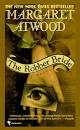
The Robber Bride by Margaret Atwood. McClelland and Stewart. 1993.

https://en.wikipedia.org/wiki/The_Robber_Bride

Cisco – Flannery O’Connor meets Elmore Leonard in San Fran

Cisco by Jim White. Dark Passages Publishing. 2019.

Reviewed by A.M. Potter. ® 2019.

Cisco tells the tale of a cunning man, a kidnapper with a Biblical sense of wrath. The novella unfolds on the streets of San Fran. Its plotline is reminiscent of a Flannery O’Connor story. The reader gets religiosity and hard-scrabble life in equal measure. In addition to the O’Connor fictional MO, we are in Elmore Leonard land. White delivers Cisco with sharp, clear prose. There are no wasted words. We are immediately pulled into the story.

The protagonist, Cisco, knows his Bible, but he doesn’t turn his cheek. He’s a lawless evangelical. He has no apparent remorse. A speech impediment humanizes him. However, it turns out to be fake. Some think he’s a mad man. Is he ‘criminally insane’? I’d say not. He knows exactly what he’s doing. He’s a killer/kidnapper of Biblical, as in monstrous, proportions, both physically and mentally. His strength appears to come from God, and yet he is a Fallen Man (echoing Prospero and Caliban in ‘The Tempest’).

On the other side of the thin blue line, the antagonist, Detective Helen McCurda, is a seasoned cop with no quit. She’s tough, competent, and sympatico. She’s everything you want a cop to be. However, Cisco is the engine of the story. His actions and complex personality move the plot forward. As in Leonard’s novels, the criminals in Cisco are far more interesting than the cops. I like that. The cops can’t always be the stars. But I do have a minor complaint – which is really a compliment. I want more of Cisco. The story ended too soon.

The King of California Noir

Who’s the King of California Noir? Michael Connelly. Some might say Raymond Chandler (his protagonist was Philip Marlowe) or Dashiell Hammett (Sam Spade). Others make a case for Alfred Hitchcock. You don’t have to be a writer to be the King. However, in my eyes, Connelly is the reigning King of California Noir. His output surpasses that of Chandler or Hammett, but that’s not all. Harry (short for Hieronymus) Bosch, Connelly’s protagonist, is a more realistic and enduring lead than either Marlowe or Spade.

This post circles Connelly’s Bosch series (it doesn’t review a particular novel). The Detective Harry Bosch novels are set in Los Angeles. Bosch is an LAPD detective. He’s a Vietnam vet, a former “tunnel rat” who operated in the vast underground mazes used by the Vietcong. He has no pretensions, and no patience for those who do. He’s tough and diligent, but he’s not a wooden macho man, not overly taciturn or snarky. Unlike Sam Spade, for example, Bosch is not hard-boiled to the core, which makes him an easier man to know. Hammett shows very little of Spade’s emotions and only the manly side. After all, Spade was a hard-edged dick. I’m not denigrating Hammett’s fictional MO. He wrote in the 1920s and 30s; hard-boiled was the schtick.

Connelly’s Bosch novels deliver plenty of explanatory details, making it easy to follow the story. Admittedly, that can slow the pace. He’s partial to what I call Hollywood plotting, such as extended car chases, but, hey, the books are set in LA. He’s more mainstream than Ian Rankin, for example. In some places, Connelly’s info-dumps are too long. Ditto for his police procedural details. At times, the prose is workman-like, which is not surprising given his prodigious output, almost a book a year. I’m OK with all of that. I get sharply plotted whodunits. I get a tough yet sympatico protagonist. I get LA.

A few quotes from the Bosch opus ….

“Bosch knew every trick there was when it came to planting obfuscation and misdirection in a murder book. He could write a how-to manual on the art of turning the [pre-trial] discovery into a nightmare for a defense lawyer. It had been his routine practice back in the day to redact words in reports without rhyme or reason, to intermittently remove the toner cartridge from the squad room photocopier so that pages and pages he was turning over were printed so lightly they were impossible or at least headache-inducing to read.”

“Bosch never got used to viewing crime scenes. He had been to hundreds of them and seen the result of human inhumanity too many times to count. He always thought that if he got used to it, then he had lost something inside that was needed to do the job right. You had to have an emotional response. It was that response that lit the match that started the fire.”