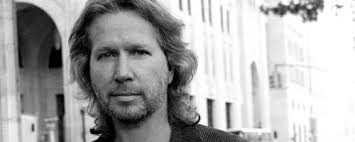
The Nightingale Won’t Let You Sleep by Steven Heighton. Hamish Hamilton. 2017.
Reviewed by A.M. Potter. ® 2019.
It’s worth revisiting the cliché all style and no substance. It refers to an overstated buildup that proves to be unwarranted. Steven Heighton’s fourth novel is anything but. The Nightingale Won’t Let You Sleep builds organically, to a multi-faceted and authentic climax.
Heighton is a Governor General Award-winning poet, a word master par excellence, yet his prose style doesn’t eclipse the storyline. On the contrary, it serves it.
The setting, an abandoned no-man’s land in contemporary Cyprus, is exotic without being distant in space and time. The storyline is compelling. Elias, a Greek-Canadian soldier suffering from PTSD after a tour in Afghanistan, appears to have found a home in a ruined demilitarized zone, a locale frozen in time since 1974. The DMZ is not empty. It hosts a band of outliers as fascinating as any found in CanLit, including The English Patient or A Discovery of Strangers.
The DMZ is a fecund setting, pregnant with promise yet also loss – in a sense, a Garden of Eden. Dislocation and the threat of eviction coexist with human warmth and beautifully simple food. Despite the temptations, the garden does not hold Elias. Or, rather, circumstances do not allow him to be held. He must depart. His gift – and the reader’s boon – is what transpires between his arrival and departure. At novel’s end, he is a changed man, occasionally conflicted, but able to move forward.
Giles Blunt was born in Canada to English parents. As he tells it, “they had colorful accents and amusing habits and never allowed themselves to be influenced by Canadians. Consequently I lived in England at home and Canada at school.” Regardless of the schism – or maybe because of it – Blunt learned how to write. Very well. He is one of the few crime writers to be nominated for the Dublin IMPAC award.
Blunt’s Detective John Cardinal novels are set in Algonquin Bay, a thinly disguised version of North Bay, Ontario. OPP (Ontario Provincial Police) Detective John Cardinal is a down-to-earth yet complex man. Blunt doesn’t hide Cardinal’s faults. The detective is not a particularly social animal (like many a detective; to wit, Connelly’s Bosch and Rankin’s Rebus). Although Cardinal bears psychic scars, he is humane, humble, and likable.
The Cardinal plotlines demonstrate that crime novels can be personal, with “literary” character development. They don’t need to be all crime all of the time. If you have interesting detectives like Cardinal and his partner, Lise Delorme, you can deliver whodunits with depth. Of course, it helps if the criminals aren’t one-dimensional. Blunt doesn’t fall into that trap. He gives us nuanced perps. As Cardinal hunts them down, the reader walks both sides of the thin blue line.
PS: Blunt’s Cardinal novels have been turned into a TV series. In my view, the books are more beguiling than the series. The TV offerings don’t deliver the depth of the novels, which echoes my general observation that movies/series tend to be inferior to the books they’re based on. Of course, every rule has its exceptions (Movies vs. Books).
“The Planet Grief. An incalculable number of light years from the warmth of the sun. When the rain falls, it falls in droplets of grief, and when the light shines, it is in waves and particles of grief. From whatever direction the wind blows — south, east, north or west — it blows cinders of grief before it.”
Advice if you get lost in
the Canadian woods:
“Panic will kill you
faster than any wolf, faster than any bear.”
Which female Canadian author has written the best mystery novel? Who’s the Queen of Canadian Mystery? Many will say Maureen Jennings, author of the Detective Murdoch series. Others will say Louise Penny, author of the Inspector Gamache series. I say Margaret Atwood. “What the &^$#!” you say.“You’re an idiot.” I know. An opinionated idiot. Let the mud fly. 😉
Before I reveal the mystery novel, I’ll relate a few arguments I’ve heard from friends. “Atwood isn’t a mystery writer.” Correct, in as much as she’s not labeled a mystery writer. “Atwood doesn’t need kudos from anyone. She’s already famous.” Also correct. “Pick someone more current.” I will, when the new Queen comes along.
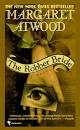
Now, to the question at hand. The best mystery novel written by a female Canadian author is …. The Robber Bride.
“Get &^$%,” you say, “The Robber Bride isn’t a genre novel. It’s literary fiction.” Yep. But that doesn’t mean it’s not a mystery, and a damn fine one. I admit, it’s not noir. I’m also stretching the definition of “mystery novel.” The Robber Bride doesn’t feature a detective or a parade of murderees. The reader knows the villain (Zenia) from the start. But you don’t know what she did, or how she did it. That’s the mystery – the howdunit, you might say.
Atwood delivers enough plot twists and obfuscation to please the most demanding of mystery fans. She deploys wry humour and strong prose. She makes you think. However, The Robber Bride has its limitations. It isn’t for the hard-boiled. Too much literary description, too much talk of “feelings.” Oh, those dreaded feelings. Me, I like a good dose of feelings now and then. I don’t want noir all the time.
The Robber Bride by Margaret Atwood. McClelland and Stewart. 1993.
A Discovery of Strangers by Rudy Wiebe. Knopf Canada. 1994
Introductory Note: I wrote the following book review in 1995. Why am I republishing it (with a few edits)? What does it have to do with writing fiction? Two words: Voice Appropriation. If you want to bypass the review, feel free to skip to the bottom of the post. {Review first published by A.M. Potter. ® 1995}
Rudy Wiebe won the 1973 Governor-General’s Award for Fiction (Canada) for The Temptations of Big Bear. Long before the advent of movies like Dances with Wolves, Wiebe’s indigenous characters took centre stage. He appropriated a multitude of historical voices, regardless of ethnicity or station in life, and allowed each to tell their own version of events.
Wiebe’s second G-G award-winning novel, A Discovery of Strangers, follows the same general format. The reader views the 1820-21 Franklin Expedition through the eyes of not only the English explorers, but also the Canadian voyagers and Yellowknife natives who made it possible. Much of the story is told from the point-of-view of a young indigenous woman called Greenstockings. Wiebe could be accused of double voice appropriation. He’s a white male who wrote as a female, not to mention an indigenous female.
A Discovery of Strangers is as much a love story as a retelling of history. The beautiful Greenstockings is a man-magnet. One of Franklin’s junior officers, Robert Hood, is besotted with her. Wiebe’s account of their deepening attraction – which finally erupts inside her father’s lodge – is as tender and tragic as a troubadour tale.
A reader cannot help noting the stylistic affinities of Wiebe’s two award-winning novels. Both use similar narrative devices – flashbacks, visionary dreams, multiple points-of-view – as well as similar prose styles. It’s almost as if the author said to himself, Hmm, that worked before. I’ll do it again.
Wiebe’s descriptive passages perfectly capture the sub-Arctic terrain, largely harsh and unforgiving in the eyes of the whites, no less harsh in the eyes of the Yellowknife, yet also pregnant with life and joy. We read of eerie ice caves, the fickle migrations of the caribou, and the endless threat of starvation. We enter the past. It may be long-lost but, in Wiebe’s hands, it is also eternally-present.
Postscript, 2019:
When A Discovery of Strangers was published (1994), some people weren’t happy with Wiebe’s double voice appropriation, that is, writing from the point-of-view (POV) of both an indigenous person and a female. It’s no easy task for a male to write convincingly as a female, let alone for a white male to write as an indigenous female. However, Wiebe succeeded. Stylistically.
As to being politically correct, in 2019 many more people challenge Wiebe’s voice appropriation than twenty-five years ago. For the most part today, voice appropriation is frowned upon. A white male like me shouldn’t write from the POV of an indigenous person. I also shouldn’t write from the POV of a female. But I do. The protagonist and sole narrator of my first North Noir detective series is a female, Eva Naslund, a Swedish-Scottish Canadian.
Why do I use a female narrator? The answer is not simple. I understand that, for some people, it’s not politically correct. I understand that I can’t think or feel exactly like a female. {Incidentally, it seems to be OK for females to use male POVs. For example, in the mystery genre, Louise Penny’s protagonist is Armand Gamache, and then there’s Agatha Christie’s Hercule Poirot.} Despite the recent voice appropriation furor, I persist. While I’m a supposedly honorable person (according to friends, and I don’t even pay them), I’m not always politically correct. I don’t think anyone is. I also persist because I write fiction. Works of imagination. Say no more.
My final spiel: I don’t care what narrative voice(s) you use. Write as a Purple Martian who’s in love with non-gender-specific star dust. If your POV is convincing, I’ll read it.
Who’s the King of California Noir? Michael Connelly. Some might say Raymond Chandler (his protagonist was Philip Marlowe) or Dashiell Hammett (Sam Spade). Others make a case for Alfred Hitchcock. You don’t have to be a writer to be the King. However, in my eyes, Connelly is the reigning King of California Noir. His output surpasses that of Chandler or Hammett, but that’s not all. Harry (short for Hieronymus) Bosch, Connelly’s protagonist, is a more realistic and enduring lead than either Marlowe or Spade.
This post circles Connelly’s Bosch series (it doesn’t review a particular novel). The Detective Harry Bosch novels are set in Los Angeles. Bosch is an LAPD detective. He’s a Vietnam vet, a former “tunnel rat” who operated in the vast underground mazes used by the Vietcong. He has no pretensions, and no patience for those who do. He’s tough and diligent, but he’s not a wooden macho man, not overly taciturn or snarky. Unlike Sam Spade, for example, Bosch is not hard-boiled to the core, which makes him an easier man to know. Hammett shows very little of Spade’s emotions and only the manly side. After all, Spade was a hard-edged dick. I’m not denigrating Hammett’s fictional MO. He wrote in the 1920s and 30s; hard-boiled was the schtick.
Connelly’s Bosch novels deliver plenty of explanatory details, making it easy to follow the story. Admittedly, that can slow the pace. He’s partial to what I call Hollywood plotting, such as extended car chases, but, hey, the books are set in LA. He’s more mainstream than Ian Rankin, for example. In some places, Connelly’s info-dumps are too long. Ditto for his police procedural details. At times, the prose is workman-like, which is not surprising given his prodigious output, almost a book a year. I’m OK with all of that. I get sharply plotted whodunits. I get a tough yet sympatico protagonist. I get LA.
A few quotes from the Bosch opus ….
“Bosch knew every trick there was when it came to planting obfuscation and misdirection in a murder book. He could write a how-to manual on the art of turning the [pre-trial] discovery into a nightmare for a defense lawyer. It had been his routine practice back in the day to redact words in reports without rhyme or reason, to intermittently remove the toner cartridge from the squad room photocopier so that pages and pages he was turning over were printed so lightly they were impossible or at least headache-inducing to read.”
“Bosch never got used to viewing crime scenes. He had been to hundreds of them and seen the result of human inhumanity too many times to count. He always thought that if he got used to it, then he had lost something inside that was needed to do the job right. You had to have an emotional response. It was that response that lit the match that started the fire.”