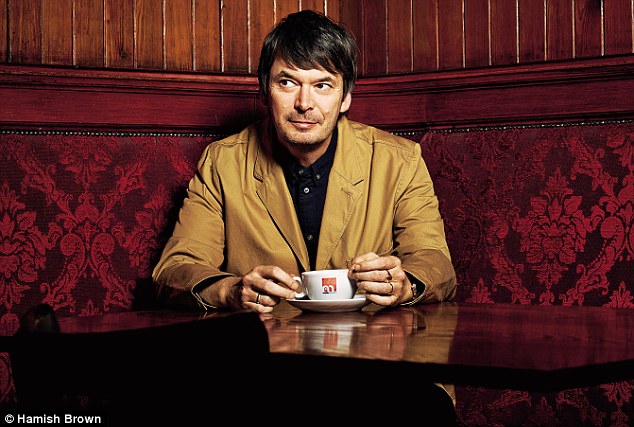
The King of Scottish Noir

Who’s the King of Scottish Noir? Ian Rankin. Hands down. Some might say Robert Louis Stevenson, who wrote Strange Case of Doctor Jekyll and Mr Hyde in 1886, but I see him as the father. In any case, Rankin’s noir output far surpasses that of Stevenson.

Take Rankin’s Inspector Rebus opus. John Rebus is a hard-edge, no-nonsense police detective with a philosopher’s head and heart. He doesn’t always play by the rules. He doesn’t suffer fools gladly. 

In the Rebus novels, mostly set in or near Edinburgh, Rankin deploys banter to counter the bleak reality of Scottish crime. He portrays tough criminals who are tougher men. The cops who hunt them are just as tough. Aye, but there’s humour too, of the Scottish ilk. Gruff, understated and, given the juxtaposition, doubly funny.  

At times, the plotting and crime MOs seem over-the-top. Some readers find the storylines overly bleak and depressing. They are cut from the cloth of real life. If you read a Rankin novel, you’ll get punched in the gut, you’ll rail at what humans do to humans. However, if you’re like me, you’ll keep reading. Ye can’nae stop. The King of Scottish Noir will hook you.

See Wikipedia for more on Ian Rankin and his twenty-plus Rebus novels.

Imperium, Then and Now

A few weeks ago, I started reading Gibbon’s The History of the Decline and Fall of the Roman Empire – it’s been collecting dust for years. The six-volume opus brought to mind the decline of a current empire. I’m not gloating. I love the USA. I spent many happy years there. It’s a chaotic yet vibrant democracy, born of lofty ideals but beset by schisms.

I read Gibbon’s opus hoping to learn things from the Roman decline. I didn’t find many. Gibbon is a past master, but, if you’re looking for modern parallels, give him a miss.

Here’s a gross oversimplification of his opus: military power is power. Every volume highlights martial prowess. The Romans limited their domain to a relatively defensible area, roughly modern-day Western Europe minus Scandinavia, believing their military reach should not exceed their grasp. America is as much a cultural and commercial power as a military power, yet it has bases all over the world. If the British Empire is an example, America will soon relinquish many of them.

The American Empire is declining faster than the British, Roman, Aztec, Incan, or Persian Empires, not to mention many others. Reading Gibbon doesn’t provide much insight into why, other than to suggest that entropy always follows cohesion. The centre does not hold for long. Can’t argue with that.

Final thought. America’s not going anywhere. The end of an empire doesn’t mean the end of a nation.